
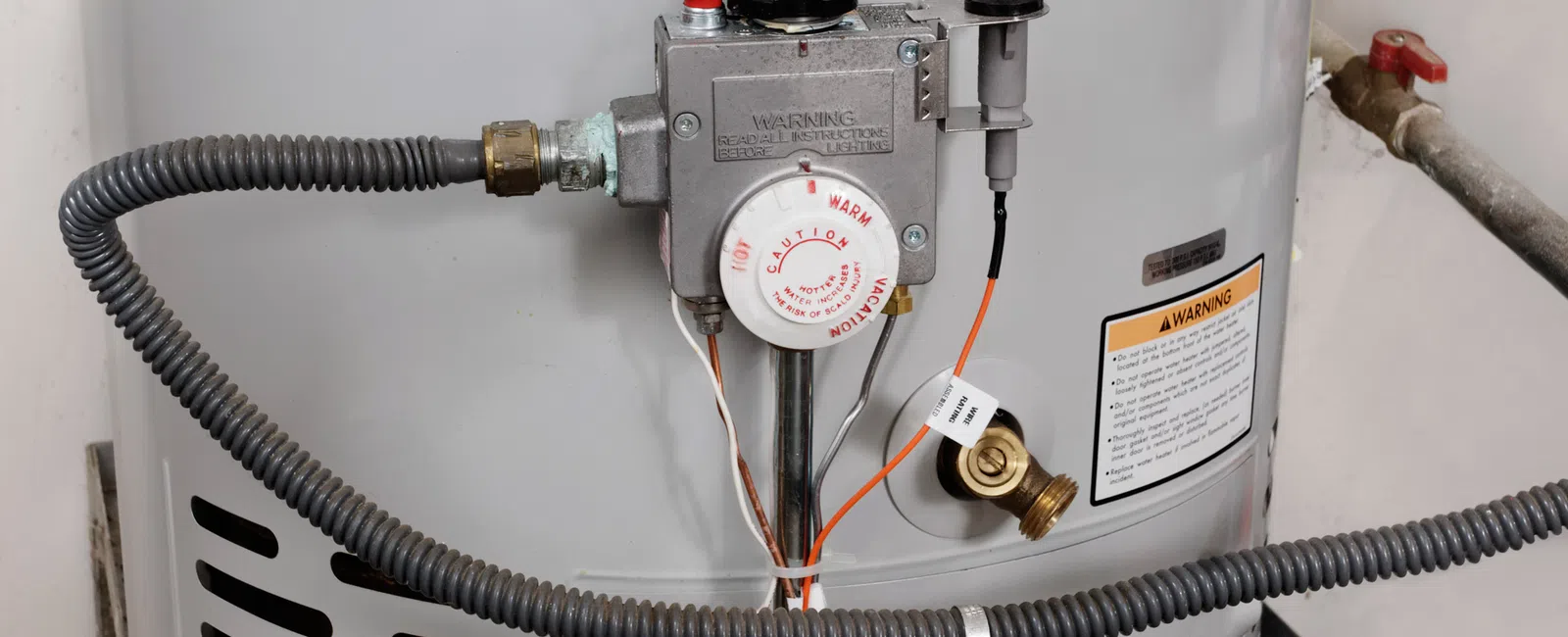
A conventional tank water heater lasts roughly eight to twelve years. A tankless unit can run up to twenty. Age by itself does not condemn a heater, but it changes what every repair is worth, because the same part on an eleven-year-old tank buys far less remaining service than it does on a five-year-old one.
That is the whole decision, and it is usually settled by two questions rather than one. How old is the unit, and which component actually failed.
Finding the Age of Your Unit
Most homeowners inherit their water heater and have no idea when it was installed. The rating plate on the side of the tank carries a serial number that encodes the manufacture date, and reading it takes a minute.
The encoding differs by brand. Some manufacturers put the month and year in the first four digits, others use a letter for the year, and a few use a coded prefix that has to be looked up. Find the brand and model on the plate, then check that manufacturer's serial number format. If the plate is unreadable, which happens in humid garages and attics, our technicians can usually date the unit from its build features.
Knowing the age reframes every quote you get. A repair on a unit inside its expected life is maintenance. The same repair at year eleven is a bet on borrowed time.
Failures That Are Usually Worth Repairing
These components fail independently of the tank, and replacing one on a unit with life left in it is normal service:
- Heating elements and thermostats on electric units
- Thermocouples, igniters, and gas control valves on gas units
- The temperature and pressure relief valve
- The drain valve at the base of the tank
- Inlet and outlet fittings and dielectric unions
- The dip tube, which distributes incoming cold water to the bottom of the tank
- The anode rod, which is a wear item and should be replaced before it is consumed
A unit that stops producing hot water is more often one of these than a dead tank. Electric units in particular fail at the element or thermostat far more often than they fail structurally, and that is a straightforward repair.
Failures That Mean the Unit Is Finished
A short list, but each one ends the conversation:
- The tank itself is leaking, which means the steel has corroded through and cannot be patched
- Repairs have become repetitive, with two or more separate failures in a short span
- The unit no longer meets the household's hot water demand, which is a sizing problem a repair cannot solve
- The heater is past its expected life and needs a significant component
Tank corrosion is the definitive one. Water heaters are protected by a sacrificial anode rod that corrodes in place of the tank lining, and once that rod is consumed the steel begins to go. There is no sealant or patch that returns a pressure vessel to service, and a breach in the tank wall enlarges as water passes through it.
Repeat repairs are the signal homeowners most often talk themselves out of. Two failures in eighteen months on an aging unit is not bad luck. It is a system reaching the end of its life one component at a time.
Why Tampa Water Shortens the Timeline
Groundwater across the region carries heavy mineral content from the limestone aquifer, and those minerals settle out as sediment on the bottom of the tank, directly over the burner or the lower heating element.
Sediment insulates. The heat source runs longer and hotter to deliver the same hot water, and the steel it is heating operates above its design temperature. That accelerates the corrosion the anode rod is fighting, which is how a heater rated for twelve years reaches the end at eight or nine. The rumbling or popping sound many homeowners notice a year or two before failure is water boiling underneath those deposits.
Annual flushing removes the sediment before it accumulates, and anode rod inspection catches depletion while replacing the rod still protects something. Both are routine service rather than repairs, and both matter more here than in markets with softer water.
Replacing While the Unit Still Works
A heater that fails on its own schedule takes the decision away from you. The replacement becomes whatever can be sourced and installed that day, sized by availability rather than by what the household actually needs.
Florida construction raises the stakes on that. Homes here sit on slabs, so water heaters go in garages, utility closets, and attics rather than basements. A tank that fails in an attic or an interior closet drains through finished ceilings, and the water damage frequently exceeds the cost of the heater it came from.
Planning the replacement while the old unit still runs leaves room to size it against current demand, to consider whether a tankless system fits the household's usage pattern, and to schedule the work at a convenient time. Our technicians will tell you honestly when a unit has years left, because recommending a replacement that is not needed is a good way to lose a customer permanently.
Water Heater Service Across the Tampa Area
Dalmatian Plumbing is family owned with more than 25 years in business, and our technicians bring over 75 years of combined experience to the work. Our licensed, insured, and background-checked plumbers diagnose, repair, and replace both tank and tankless water heaters.
Contact our team to schedule service, and we will give you a straight assessment of what your unit needs and how much life it has left.