
Backflow is when water in a plumbing system flows the wrong
way, from a private property back into the public drinking water supply. A
backflow preventer is a valve assembly installed on a water line that only lets
water move in one direction. If pressure ever pushes or pulls water backward,
the device closes and blocks it, keeping irrigation water, pool water,
chemicals, and other contaminants out of the water you and your neighbors
drink.
In Tampa, backflow preventers are essential. The City of
Tampa Water Department requires them on many residential properties, including
homes with in-ground sprinklers, pools, wells, and reclaimed water. This blog
explains how backflow happens, how the device stops it, and what Tampa
homeowners need to know about installation and testing.
Backflow Happens When Water Pressure Reverses
Under normal conditions, the city's water mains hold higher
pressure than the pipes inside your home, so water always flows toward your
faucets. Backflow in plumbing happens when that pressure relationship flips.
There are two ways it can occur.
Back-Siphonage
Back-siphonage happens when pressure in the public supply
drops suddenly. A water main break, heavy firefighting demand from nearby
hydrants, or a pressure loss during a storm can create a vacuum effect that
pulls water backward out of homes and businesses. Anything connected to the
plumbing at that moment, such as a garden hose sitting in a bucket of
fertilizer or an irrigation line in wet soil, can get drawn into the supply.
Backpressure
Backpressure happens when pressure on the private side of
the system becomes higher than the supply pressure. Pumps, boilers, elevated
tanks, and some irrigation and pool equipment can generate enough force to push
water backward past the meter and into the city's lines.
Cross-Connections Make Backflow Dangerous
Backflow only becomes a health problem when there is a
cross-connection, meaning any physical link between drinking water and a
non-drinking source. Sprinkler systems, pool fill lines, wells, reclaimed water
systems, and fire sprinkler lines are all common cross-connections at Tampa
homes. The backflow preventer is what stands between those sources and the
public water system.
What a Backflow Preventer Does
The purpose of a backflow preventer is to protect drinking
water from contamination. It does that by allowing water to flow in only one
direction and closing automatically the instant flow tries to reverse.
Depending on the type, it may also vent water out of the device to guarantee
nothing makes it back into the supply.
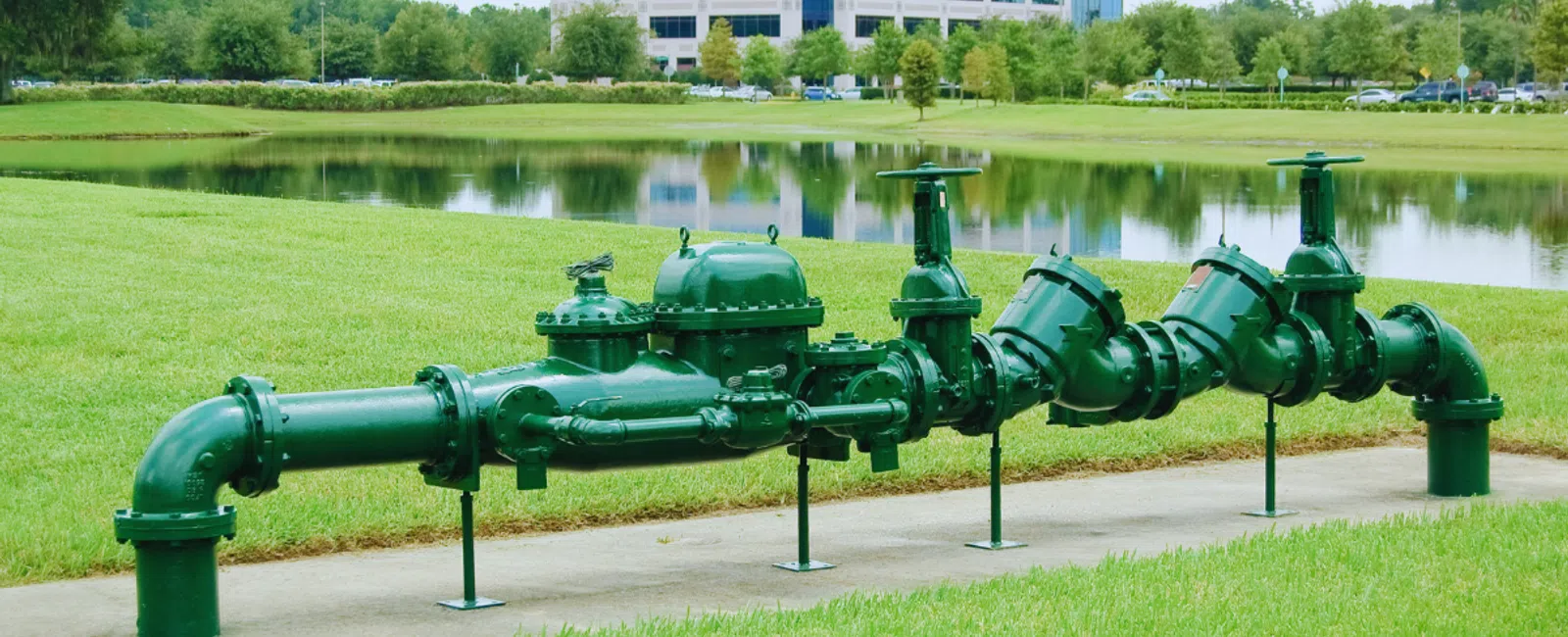
On most Tampa homes that need one, the backflow device sits
near the water meter or where the irrigation line branches off the main
service. It is usually a set of brass valves and fittings above ground, often
inside a green or beige enclosure or cage near the curb or along the side of
the house.
How a Backflow Preventer Works
The exact design varies by device, but a typical testable
backflow preventer works like this:
- Water enters through a shutoff valve. An isolation valve on the inlet side lets a technician shut off flow for testing or repair.
- The first check valve opens. Normal supply pressure pushes a spring-loaded check valve open, and water flows forward.
- The second check valve opens. A second independent check valve provides backup protection in case the first one fails.
- Pressure drops or reverses. If supply pressure falls or downstream pressure rises, the springs snap both check valves shut.
- Relief valve opens (on some devices). Reduced pressure assemblies have a relief valve between the checks that discharges water to the outside if the checks leak, so contaminated water has nowhere to go but out.
- Test cocks allow inspection. Small ports on the device let a certified tester measure pressure across each valve to confirm it is working.
Because the springs and rubber seals inside wear out over
time, a backflow device can fail without showing any outward signs. That is why
testing is required on a schedule.
Common Types of Backflow Prevention Devices
|
Device |
How
It Protects |
Where
You See It |
|
Double check valve assembly
(DCVA) |
Two independent spring-loaded
check valves with shutoffs and test cocks |
Tampa's minimum requirement for
reclaimed water homes, wells, and new potable irrigation systems |
|
Reduced pressure zone assembly
(RPZ) |
Two check valves plus a relief
valve that discharges water if the checks fail |
High hazard connections,
commercial buildings, and fire lines that contain chemical additives |
|
Double detector check assembly |
A double check assembly with a
bypass meter that detects water use or leaks |
Fire sprinkler lines, including
new residential fire lines in Tampa |
|
Pressure vacuum breaker (PVB) |
A check valve and an air inlet
that opens to break a vacuum |
Irrigation systems in many
areas, installed above the highest sprinkler head |
|
Hose bib vacuum breaker |
A small screw-on device that
stops water from siphoning back through a spigot |
Outdoor faucets and laundry sink hose connections |
A Backflow Preventer Is Different From a Sewer Backwater Valve
People searching for a "backflow water valve" are
sometimes thinking of a backwater valve, which is installed on a sewer line to
keep sewage from flowing back into a home when the public sewer backs up. That
device protects your house from the sewer. A backflow preventer protects the
drinking water supply from your house. They solve different problems, and one
cannot replace the other.
Signs Your Backflow Preventer Needs Attention
A failing device does not always announce itself, which is
the reason for scheduled testing. Still, these are signs to have it checked
sooner:
- Water dripping or spraying from the device or its relief port
- Discolored, cloudy, or oddly scented tap water
- A sudden drop in water pressure at the house or the irrigation system
- Visible cracks, corrosion, or damage to the valves or fittings
- A device that failed its last test or is overdue for one
- Freeze damage after a rare cold snap, or damage from lawn equipment or storms
If you ever suspect contaminated water is getting into your
home's supply, stop drinking the tap water and contact the Tampa Water
Department and a plumber right away.
What to Expect When a Backflow Preventer Is Installed
Backflow preventer installation is not a DIY job. The device
must be the correct type for the hazard, sized to the line, installed at the
right height and location, and accessible for testing. A licensed plumber will
also check that the installation meets city standards and that any required
permit is pulled.
There is one side effect worth knowing about. Once a
backflow preventer is in place, water can no longer expand back into the city
main. When a tank water heater warms up, that expanding water has nowhere to
go, which can raise pressure inside the home and put strain on the water
heater, fixtures, and supply lines. A plumber may recommend a thermal expansion tank to manage it.
Work With a Tampa Backflow Plumber at Dalmatian Plumbing
Whether you are adding a pool or sprinkler system, got a
notice from the city, or have a device that is leaking or failed its test,
Dalmatian Plumbing can help. Our Tampa plumbers install, repair, and replace
backflow prevention devices and make sure the work meets local requirements.
Schedule a service with us today.
Frequently Asked Questions About Backflow Preventers
What is backflow in plumbing?
Backflow is the reverse flow of water from a home or
business back into the public drinking water supply. It happens when pressure
in the city main drops (back-siphonage) or when pressure on the property side
rises above supply pressure (backpressure). If a cross-connection is present,
backflow can carry contaminants into drinking water.
What does a backflow preventer do?
A backflow preventer allows water to flow in only one
direction. When pressure drops or reverses, its spring-loaded check valves
close to stop water from flowing backward. Some types also discharge water
through a relief valve. The goal is to keep irrigation water, pool water,
chemicals, and other contaminants out of the drinking water supply.
Do I need a backflow preventer in Tampa?
You likely do if your property has a pool, an in-ground
irrigation system, a fire sprinkler system, a well or pond, or both potable and
reclaimed water. The City of Tampa Water Department also requires backflow
prevention for all commercial, industrial, and multifamily properties.
What is the difference between a backflow preventer and a backwater valve?
A backflow preventer sits on the water supply line and keeps
water from your property from flowing back into the public drinking water
system. A backwater valve sits on the sewer line and keeps sewage from backing
up into your home. They protect against different problems.
Can I install a backflow preventer myself?
No. The device must be the right type for the hazard, installed to city standards, and accessible for certified testing. Installation should be handled by a licensed plumber, who can also address related issues such as thermal expansion on the home's water heater.